JNM journalist Hardeep Jamwal, Jammu
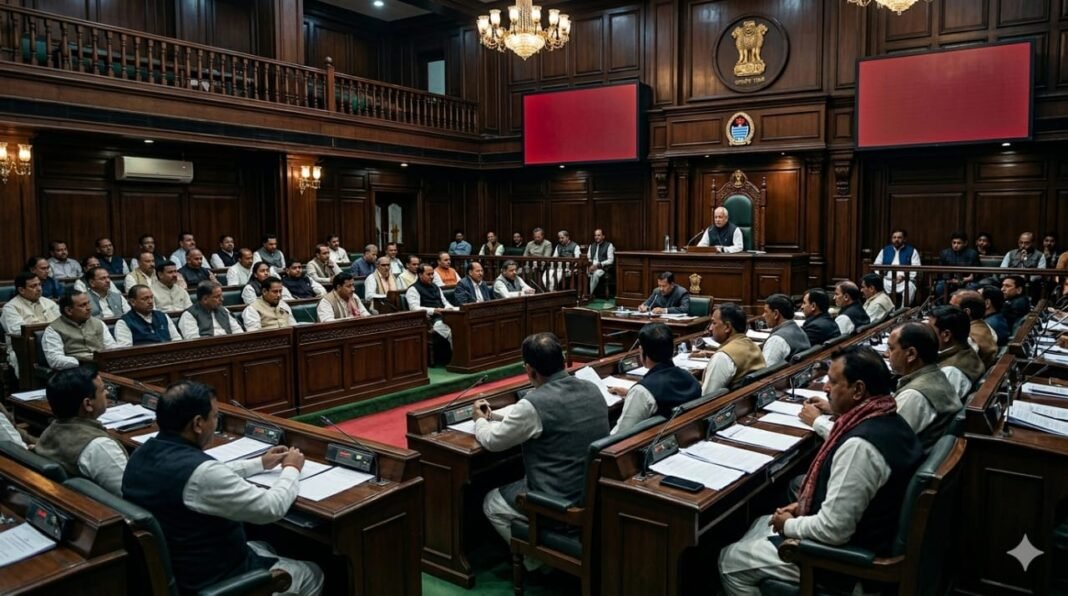
The budget session of the Jammu and Kashmir Assembly was adjourned sine die on Saturday. Announcing the conclusion of the session, Speaker Abdul Rahim Rather stated that a total of 22 sittings were held during the session, which ran from February to April, and the House worked for 6636 minutes, or 110 hours and 6 minutes.
The budget session began on February 2, 2026. Chief Minister Omar Abdullah presented the budget in the House on February 6. A detailed discussion on departmental grants took place until February 20, after which the House was recessed for five weeks. The session resumed on March 27, and various legislative and financial business was completed.
The Speaker informed that with 22 sittings, this session was the second longest budget session among states in the country, while Gujarat ranked first with 23 sittings. During this period, a total of 8 government bills were received, which were introduced and passed in the House. In addition, 25 official documents were laid in the House, and an ordinance was also introduced.
Under Private Members’ Business, 36 bills from the previous session were pending, while 39 new bills were received in this session. Of these, 72 bills were listed, 24 were discussed, and 2 were introduced in the House.
During Question Hour, a total of 1528 questions were received, of which 802 were starred and 726 were unstarred. Of these, 1379 questions were listed, while 144 were rejected, 2 were withdrawn, and 3 questions could not be listed. 151 starred questions were discussed in the House, and 331 supplementary questions were asked.
A total of 110 notices were received under Calling Attention Motions, of which 47 were accepted and 26 were discussed. Meanwhile, 128 motions were received, of which 101 were accepted, but no motions were passed.
In addition, the House received 2,231 cut motions, of which 2,059 were accepted and 172 were rejected.
Speaker Abdul Rahim Rather commended all members for their cooperation in successfully conducting the session, stating that all parties were given a full opportunity to express their views in the House, which reflects the strength of democratic traditions. He described the ministers’ workload as challenging, noting that they have to handle the responsibilities of multiple departments.
He particularly commended Chief Minister Omar Abdullah, noting that despite his busy schedule, he actively participated throughout the session and personally answered questions. The role of the Chief Secretary and other officials was also praised.
At the conclusion of the session, the Speaker announced that the House was adjourned sine die. Members of all parties expressed their gratitude to the Speaker and thanked him for the smooth conduct of the House.