Hardeep Jamwal, JNM Journalist, Jammu
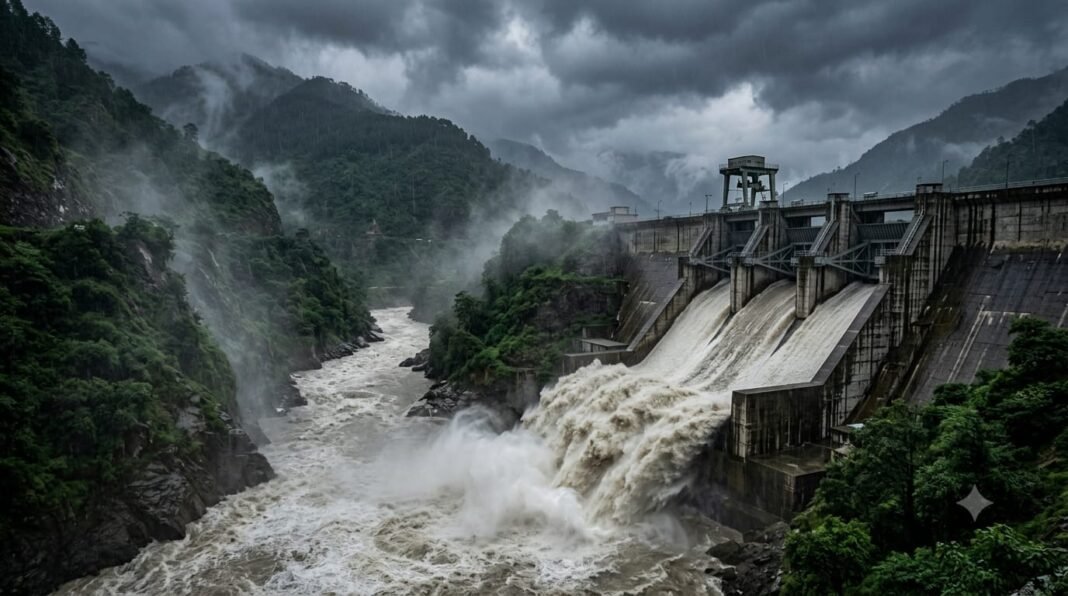
Continuous heavy rainfall in Jammu and Kashmir has caused a rapid rise in the water level of the Chenab River. To manage the increasing water pressure, the gates of the Salal and Baglihar hydroelectric projects in Ramban district have been opened. The simultaneous opening of three gates at the Baglihar Dam caused a sudden surge in the river’s flow, further raising the water level.
Videos showing water rushing out of the dams at high speed are going viral on social media. While many found the spectacle thrilling, concerns have mounted across the border in Pakistan regarding the rising water levels of the Chenab. Reports indicate that authorities have heightened vigilance in certain areas of Pakistan due to the potential risk of flooding.
Experts state that releasing excess water is a standard and necessary procedure when water levels in dams exceed safe limits during the monsoon season. This measure aims to safeguard the dam’s structural integrity and avert potential hazards.
Given the recent tensions between India and Pakistan over the Indus Waters Treaty, this development has also sparked political and diplomatic discussions. Pakistan had previously expressed concerns regarding water scarcity, whereas now, fears of flooding are being voiced following the release of excess water.
A large number of reactions regarding this issue have surfaced on social media. Many users have shared comments and memes linking the event to India’s water management policy. However, experts maintain that dam operations are conducted strictly in accordance with technical standards and safety requirements.
Meanwhile, the Jammu and Kashmir administration has urged residents living along the banks of the Chenab River to remain vigilant. People have been advised to avoid unnecessary movement near the river and to adhere to the guidelines issued by the administration. The Meteorological Department has forecast heavy rainfall in several parts of the state in the coming days, prompting the administration to remain on high alert.