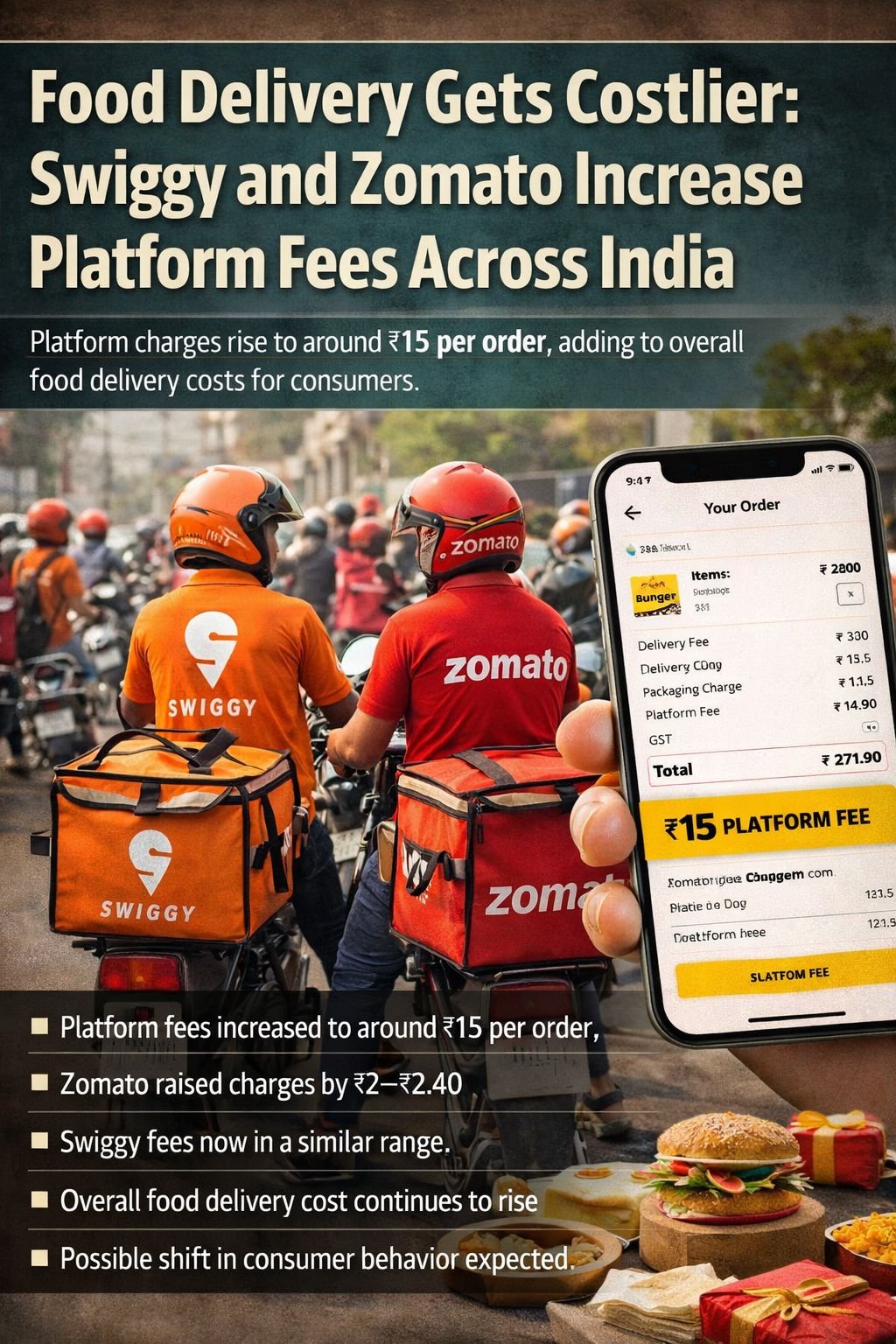
👉 Platform charges rise to around ₹15 per order, adding to overall food delivery costs for consumers
In a move that is set to impact millions of online food delivery users, leading platforms Swiggy and Zomato have increased their platform fees, making food ordering slightly more expensive across India. The revised charges have pushed the platform fee to approximately ₹15 per order, marking a noticeable rise compared to previous rates.
According to the latest updates, Zomato has raised its platform fee from around ₹12.50 to ₹14.90 per order, reflecting an increase of about ₹2 to ₹2.40. Meanwhile, Swiggy continues to maintain its platform fee in a similar range of approximately ₹14 to ₹15, effectively aligning pricing across both major competitors in the market.
The platform fee is a fixed charge applied to every order placed through the app, regardless of the order value. While the increase may appear minimal at first glance, it adds to a range of other charges that customers already pay, including delivery fees, packaging charges set by restaurants, and applicable taxes. In some cases, additional costs such as small order fees are also levied, significantly raising the final bill amount.
Industry experts note that the cumulative impact of these charges can be substantial. For instance, an order worth ₹200 could now cost anywhere between ₹280 and ₹320 after adding all applicable fees. This growing gap between menu price and final payable amount has become a point of concern among regular users of food delivery services.
The companies have attributed the increase in platform fees to rising operational costs, including higher fuel prices, expansion of delivery networks, and investments in improving service efficiency. With logistics and last-mile delivery becoming increasingly expensive, platforms are looking for ways to maintain profitability while continuing to offer convenience to users.
However, the decision has drawn mixed reactions from consumers. While some users understand the need for operational sustainability, many have expressed dissatisfaction over the rising cost of ordering food online. Frequent users, in particular, feel that repeated fee hikes are gradually making food delivery a luxury rather than a convenience.
Market analysts suggest that this trend could influence customer behavior in the coming months. Some users may reduce the frequency of their orders, opt for direct restaurant purchases, or switch to dine-in options. The impact may be more pronounced in smaller cities and price-sensitive markets, where even minor increases can affect demand.
Despite the hike, both Swiggy and Zomato are expected to continue offering discounts, promotional deals, and subscription benefits to retain their user base in an increasingly competitive market.
Experts also point out that platform fees, which were as low as ₹2 a few years ago, have steadily increased over time, indicating a shift in the business model of food delivery platforms toward more direct revenue generation from customers.
In conclusion, while the convenience of online food delivery remains unmatched, the rising costs associated with it may compel consumers to rethink their ordering habits in the near future.
⸻
📊 Key Highlights:
• Platform fees increased to around ₹15 per order
• Zomato raised charges by ₹2–₹2.40
• Swiggy fees now in a similar range
• Overall food delivery cost continues to rise
• Possible shift in consumer behavior expected