JNM journalist Hardeep Jamwal, Jammu
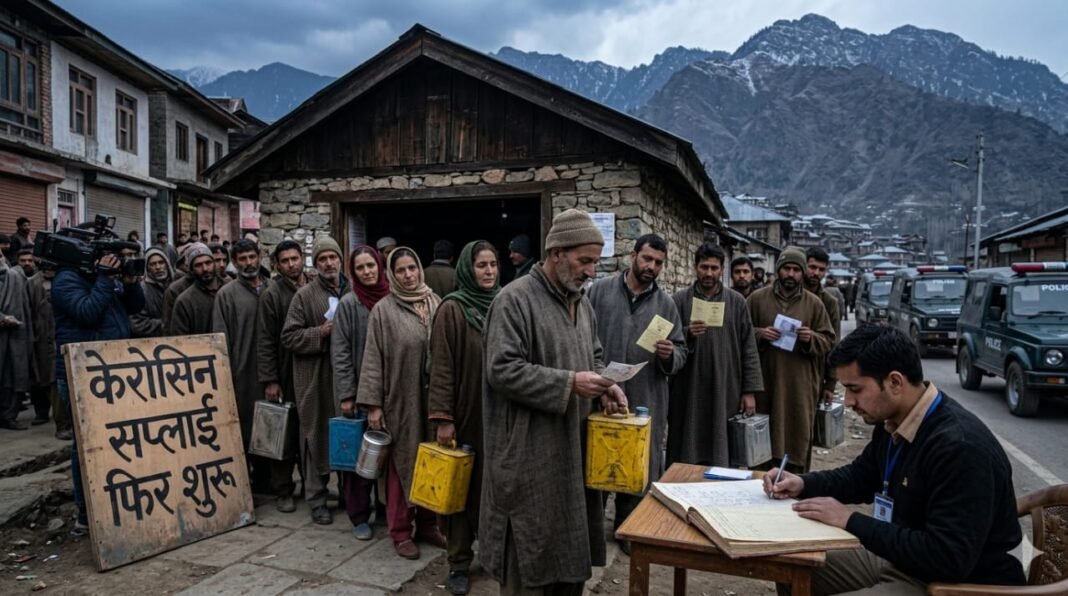
Amid the ever-increasing LPG shortage, the Jammu and Kashmir government has taken a major decision and expedited the process of resuming kerosene supply in the state. Following the announcement in the Assembly session, the Consumer Affairs and Public Distribution Department has begun soliciting applications for issuing kerosene depot licenses.
According to the department, in the initial phase, kerosene will only be made available to poor families covered under the Antyodaya Anna Yojana (AAY). These families will receive a fixed amount of kerosene each month at subsidized rates. While the exact number of liters of kerosene per family has not yet been determined, department officials say the monthly quota will be determined based on the number of family members.
The government has initiated the process of issuing new depot licenses for the wholesale and retail sale of kerosene. The department has invited applications from interested parties. Merit will be evaluated based on applicants’ location and needs, after which licenses will be issued to ensure kerosene reaches those in need in different areas.
The department has clarified that anyone with a Jammu and Kashmir domicile who has at least passed the 10th standard can apply for a kerosene depot license. Licenses will be issued after applications are vetted at the district level. The entire process may take one to two months.
It is worth noting that kerosene supply in the state was discontinued several years ago. In 2006-07, the then government canceled most depot licenses due to allegations of black marketing. Subsequently, limited supplies continued through government depots. However, after 2019, kerosene supplies from the central government steadily decreased, and in 2022, they ceased completely.
Now, in light of the LPG crisis and the increasing hardship faced by poor families, the government has decided to resume kerosene supply after many years. Department officials say that efforts are being made to prioritize existing depot operators, but so far, very few applications have been received. As applications increase, arrangements will be made to deliver kerosene to remote and needy areas of the state.