JNM journalist Hardeep Jamwal, Jammu
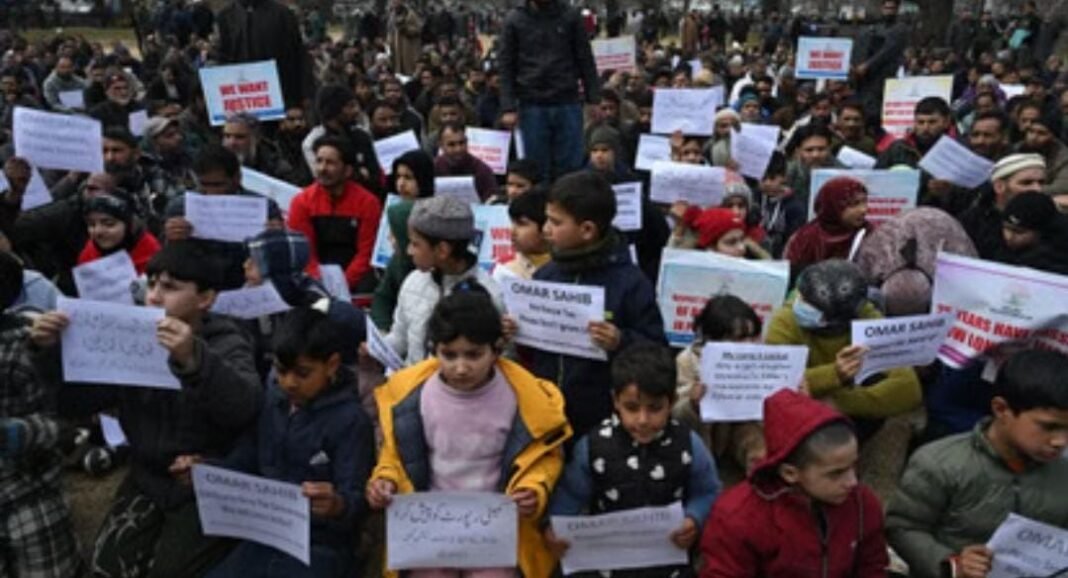
On Thursday, daily wage workers and their families staged a strong protest in Srinagar demanding their pending demands. Gathered at the city’s historic Sher-e-Kashmir Park, daily wage workers raised slogans against the government, demanding regularization and the implementation of a minimum wage. A notable feature of the protest was that a large number of workers brought their children along, holding placards and shouting slogans like “We want to study, not protest” and “Don’t play with our future.”
Tight security arrangements were in place outside the park since morning. Protesters began gathering around 11 a.m. Some workers attempted to protest outside the park, prompting police to take them into preventive custody. Later, all the protesters gathered inside the park and held a public meeting.
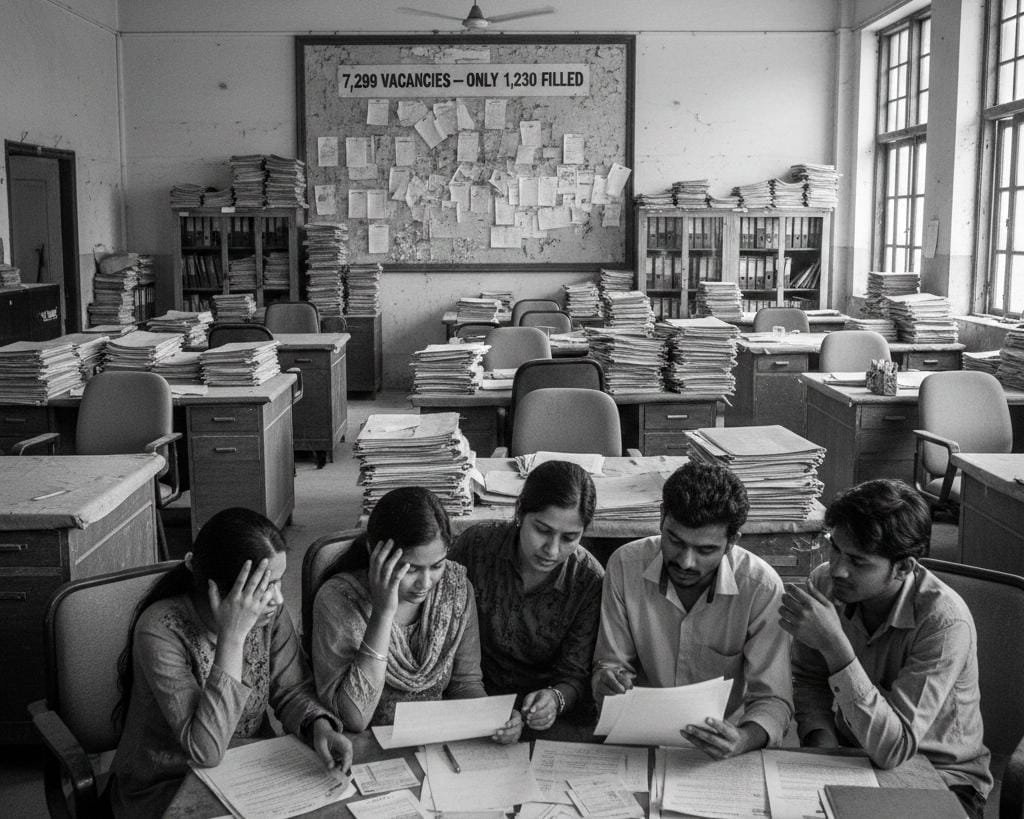
The protesters stated that despite serving on a temporary basis for years, they had neither received permanent status nor the benefit of a minimum wage. They demanded the government clarify the nature of the recently announced regularization policy. Is it limited to a salary increase, or will employees receive all the same benefits as other government employees? They also asked what provisions will be made for employees who have retired or are about to retire.
The protesters stated that they have high hopes from the government formed with overwhelming public support, but if their problems are not resolved, they will intensify their agitation. They warned of a demonstration outside the Jammu and Kashmir National Conference headquarters, Nawa-e-Subh, on February 16.
On the same day, Asha workers also demonstrated in the city demanding the implementation of the Minimum Wages Act. They stated that despite providing healthcare services at the grassroots level, they are not receiving adequate remuneration. The protesters appealed to the government to recognize their contributions and ensure their economic security.
The demonstrations by daily wagers and Asha workers have once again raised serious questions about the future of temporary employees in the state. Now it remains to be seen what stance the government takes on these demands and whether the employees are able to benefit from a clear policy. This is a big question.