JNM Journalist Hardeep Jamwal, Jammu
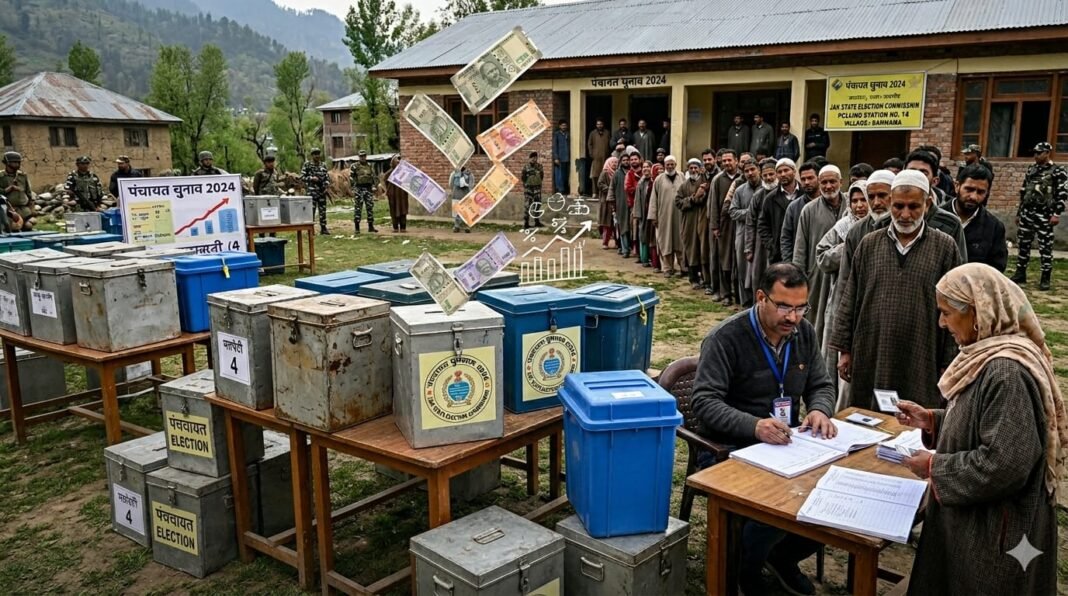
The upcoming Panchayat elections in Jammu and Kashmir appear to be posing a challenge this time—not merely politically, but economically as well. The ballot boxes used to elect the “village government” are now placing a heavy strain on the Election Commission’s budget. A significant surge in the prices of ballot boxes over the past few years has cast a new shadow of concern over election preparations.
According to reports, approximately 40,000 ballot boxes will be required across the region to conduct the Panchayat elections in a peaceful and orderly manner. However, the escalating cost of these boxes has created an additional financial burden—amounting to crores of rupees—for the Election Commission. Between 2018 and 2020, the price of a single ballot box ranged from approximately ₹1,000 to ₹1,200; today, however, the cost for the very same box has risen to around ₹1,500 per unit. This translates to an increase of roughly 30 to 50 percent in prices over the last eight years.
According to sources, the Election Commission may require approximately ₹6 crore to complete this entire process and ensure 100 percent voter turnout. Consequently, the Commission is now actively exploring options to curtail expenses. Reports suggest that a plan to rent ballot boxes—rather than purchasing new ones—is being given serious consideration.
In this regard, discussions are currently underway with the governments of Haryana and Himachal Pradesh. There is a strong possibility that the Haryana government may provide Jammu and Kashmir with a bulk supply of 40,000 ballot boxes. If this arrangement materializes, the Election Commission could be spared the substantial expenditure otherwise required to purchase new boxes.
Experts view Panchayat elections as the very bedrock of democracy; however, they warn that the continuously rising costs associated with electoral arrangements could evolve into a major challenge for the administration in the times to come. The rising cost of basic electoral supplies—such as ballot boxes—also serves as a stark reminder that conducting elections has become significantly more expensive today than it was in the past. While a single vote cast by the public to elect the village government is considered extremely precious, this time around, even the ballot box—which safeguards that very vote—is proving to be a costly affair for the administration.