JNM Journalist Hardeep Jamwal, Jammu
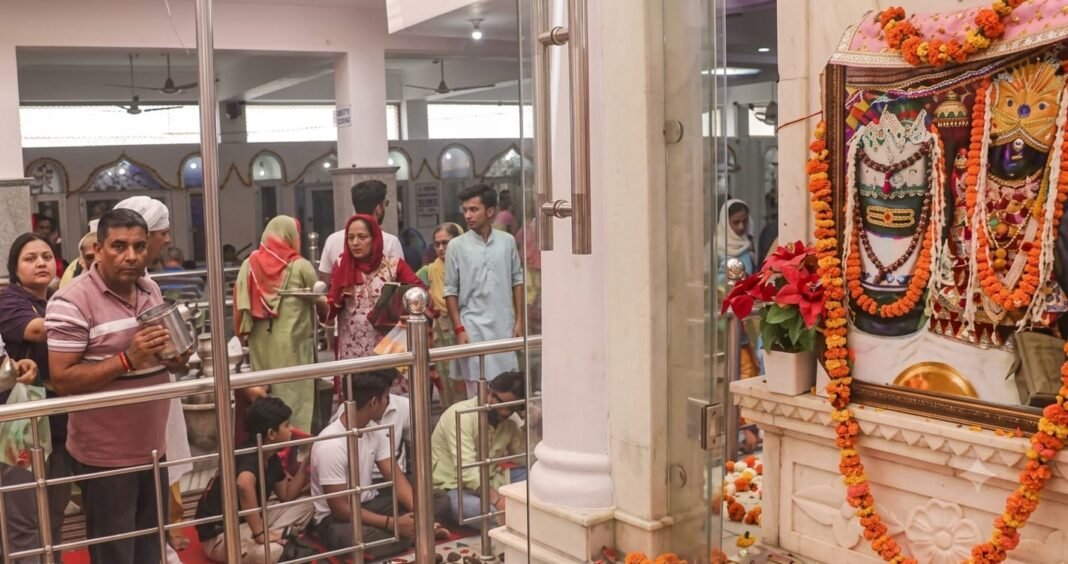
Situated on the soil of Kashmir, the Mata Kheer Bhawani temple has long been a major center of faith for devotees. Located in the village of Tulmulla in the Ganderbal district, this sacred shrine is renowned worldwide not only for its religious significance but also for its mysterious spring. Every year, on the occasion of Jyeshtha Shukla Ashtami, thousands of devotees gather here for the Kheer Bhawani Mela to seek the blessings of Mata Ragnya Devi; they offer milk, kheer (rice pudding), and mishri (sugar candy) into the spring while praying for happiness and prosperity.
Mata Ragnya—revered as Kheer Bhawani—is the presiding deity of the Kashmiri Pandit community and an integral part of Kashmir’s cultural and religious heritage. It is believed that she acquired the name ‘Kheer Bhawani’ due to the tradition of devotees offering kheer to the Goddess. Every year, a large number of devotees from across the country and abroad visit the site to offer prayers.
The sacred spring located within the temple complex is considered its most distinctive feature. According to local belief, the water of this spring changes color from time to time. Devotees believe that whenever a major crisis looms over Kashmir, the water in the spring turns dark or black. Such color changes were reportedly observed prior to the exodus of Kashmiri Pandits in 1990 and the devastating floods of 2014. Although no clear scientific explanation for this phenomenon has been established, the mystery continues to intrigue people.
The temple also finds special mention in historical records. This sacred site is described in the Rajatarangini, the famous historical chronicle of Kashmir. It is also referenced in the Ain-i-Akbari, a text from the Mughal era. Great saints such as Swami Vivekananda and Swami Ram Tirath are also believed to have visited this site to seek the blessings of the Goddess. According to mythology, Mata Ragnya Devi was the family deity (Kuldevi) of Ravana, the ruler of Lanka. It is said that Ravana worshipped her, but distressed by his unrighteous deeds, the Goddess left Lanka. Lord Hanuman brought her to the Tulmula region of Kashmir, where she resides to this day. It is also believed that Ravana offered Kheer (sweet rice pudding) to the Goddess, after which she came to be known as Kheer Bhawani.
After their displacement from Kashmir, Kashmiri Pandits who settled in Jammu established a temple dedicated to Mata Ragnya in Bhagwati Nagar as well. Today, immense devotion among pilgrims is evident at both locations—Jammu and Kashmir. During the fair, a steady stream of devotees visits both temples.
The Kheer Bhawani Mela is not merely a religious event; it is also a symbol of Kashmiri culture, tradition, brotherhood, and the spirit of staying connected to one’s roots. Steeped in faith, history, and mystery, this sacred site remains a focal point of belief for millions of people.
Subtitle:
The Mata Kheer Bhawani temple in Tulmula remains a major attraction for pilgrims from across the globe, owing to its mysterious, color-changing sacred spring and centuries-old beliefs.