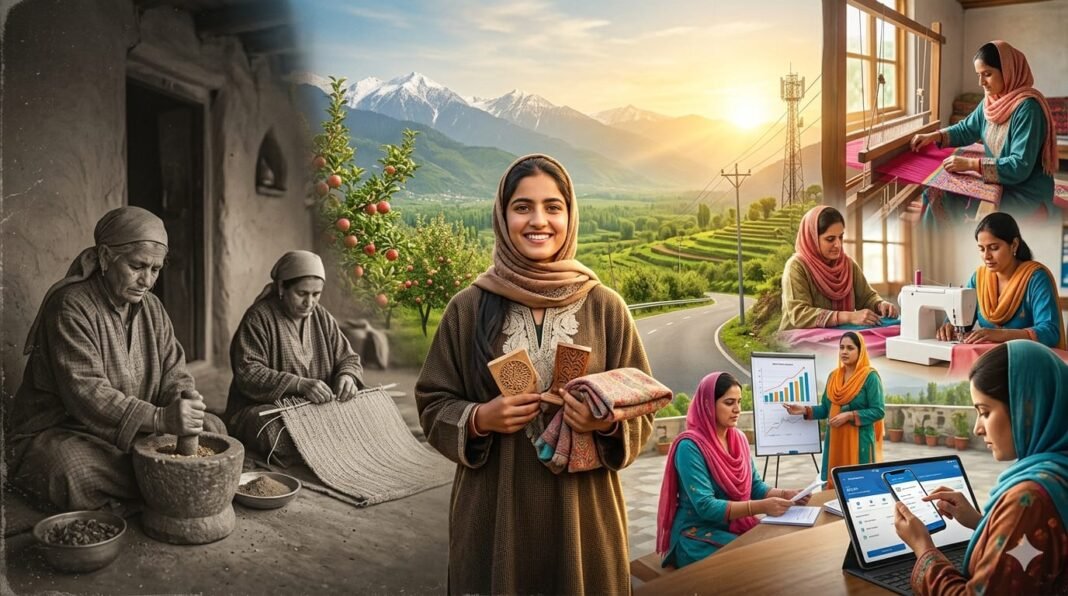
The abrogation of Article 370 and Article 35A on August 5, 2019, marked a historic turning point in the socio-economic and political landscape of Jammu and Kashmir. While the decision brought significant administrative and constitutional changes, its impact has also been felt in the lives of rural women, particularly in terms of economic empowerment, access to opportunities, and financial independence.
Challenges Faced by Rural Women Before the Abrogation
Before 2019, rural women in Jammu and Kashmir faced numerous socio-economic barriers. Limited access to quality education and vocational training restricted their employment opportunities and entrepreneurial aspirations. Women often had limited control over productive resources such as land, agricultural inputs, and financial assets, making economic participation difficult.
Patriarchal social norms further confined many women to unpaid domestic work, limiting their ability to contribute to income-generating activities. Poor infrastructure, inadequate transport facilities, weak market linkages, and limited digital connectivity created additional obstacles to mobility and economic inclusion.
Financial exclusion was another major concern. A significant number of rural women lacked access to formal banking services, credit facilities, and investment opportunities. Moreover, awareness regarding government welfare schemes and economic development programs remained relatively low.
New Opportunities After the Abrogation of Article 370
Following the abrogation, several Central Government welfare and development schemes were fully extended to Jammu and Kashmir. Initiatives such as the Pradhan Mantri Ujjwala Yojana, Pradhan Mantri Mudra Yojana, and Skill India Mission have provided women with financial assistance, skill development opportunities, and support for entrepreneurship.
One of the most significant developments has been the strengthening of women’s property rights. With the nullification of Article 35A, women can retain their property rights even after marrying a non-resident and can transfer property to their children without legal uncertainty. This has enhanced financial security and economic confidence among women.
The Growing Impact of Self-Help Groups
Self-Help Groups (SHGs) under the National Rural Livelihood Mission (NRLM) have emerged as a powerful tool for women’s empowerment. These groups promote savings, credit access, entrepreneurship, and collective income-generation activities. Since 2019, the expansion of SHGs and increased financial support have enabled thousands of rural women to participate in economic activities and improve household incomes.
Boost to Handicrafts and Cottage Industries
Jammu and Kashmir is renowned for its rich handicraft heritage, including Pashmina shawls, carpet weaving, wood carving, and willow-based products. Women constitute a significant portion of the workforce in these sectors. Government initiatives focusing on training, market access, branding, and financial support have helped strengthen these traditional industries and enhance women’s earnings.
Education and Skill Development
The post-abrogation period has witnessed increased emphasis on education and skill development. Various training programs have been introduced to improve literacy, employability, and entrepreneurial skills among rural women. These initiatives are helping women become active contributors to the region’s economic growth.
Tourism as a Source of Livelihood
Tourism remains one of the most important sectors of Jammu and Kashmir’s economy. Efforts to revive and expand tourism have created fresh opportunities for women in rural areas. Women are increasingly participating in homestay businesses, handicraft sales, cultural tourism, and hospitality services, generating sustainable income and improving their standard of living.
Conclusion
The abrogation of Article 370 has opened new avenues for the economic empowerment of women in rural Jammu and Kashmir. Improved property rights, access to central welfare schemes, expansion of Self-Help Groups, skill development initiatives, and tourism-related opportunities have collectively strengthened women’s participation in the economy.
However, challenges such as social barriers, infrastructural gaps, and limited awareness still need to be addressed. With sustained policy support and inclusive development strategies, rural women in Jammu and Kashmir can play a transformative role in shaping the region’s economic future while achieving greater financial independence and social empowerment.
Kritika Thakur
Student, The Law School, University of Jammu