JNM Journalist Hardeep Jamwal, Jammu
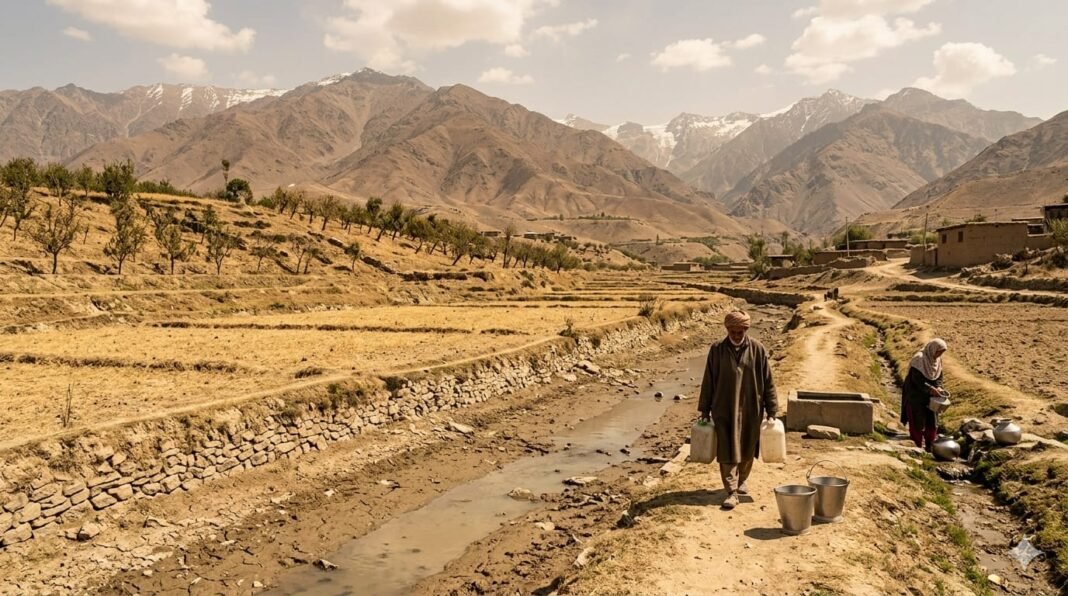
Jammu and Kashmir has been facing a rainfall deficit since the beginning of this year. According to the latest Meteorological Department data, from January to May 2026, the entire Union Territory recorded 42% less rainfall than normal. In May alone, only 49.4 mm of rainfall was recorded against the normal 77.5 mm, representing a 36% shortfall. Most worryingly, since November 2025, rainfall has been below normal in every month.
Rainfall Account in Deficit for Every Month
Meteorological Department data shows that January received 23% less rainfall, February 89% less, March 34% less, April 13% less, and May 36% less. The massive 89% deficit recorded in February has severely impacted the annual average, and this figure remains the most worrying.
Shopian worst affected in Kashmir
Among the districts in the Kashmir division, Shopian saw the highest rainfall deficit of 83 percent, receiving only 13.5 mm of rain against the normal 78.2 mm. Budgam and Kulgam both recorded a 69 percent deficit. Anantnag saw a 56 percent deficit, Srinagar a 43 percent deficit, Pulwama a 42 percent deficit, Bandipora a 39 percent deficit, and Baramulla a 14 percent deficit. However, rainfall in Ganderbal and Kupwara remained near normal levels.
Ramban lags behind in the Jammu division
In the Jammu division, Ramban recorded a 65 percent deficit, Kishtwar a 57 percent deficit, Kathua a 56 percent deficit, Jammu a 55 percent deficit, and Reasi a 53 percent deficit. Rainfall was also below normal in Rajouri, Doda, Samba, and Udhampur. Poonch was the only district in the division to receive relief, receiving 122.8 mm of rainfall, or 49 percent more than the normal 82.3 mm.
Glaciers Also Being Affected
According to environmentalists, the consistently low winter snowfall is directly impacting the glaciers’ nutrition and seasonal snow reserves. This natural water storage system, which supplies water to rivers and streams during the warmer months, is gradually weakening. Rising temperatures and reduced snowfall together pose a serious threat to the region’s long-term water security.
Hydropower and Agriculture in Crisis
Experts say that if drought-like conditions persist at the end of the year, it will directly impact hydropower generation, irrigation networks, horticulture, agriculture, and drinking water availability. Groundwater recharge will also be affected. Experts have urged officials to implement better water management, conservation measures, and long-term planning to address the impending crisis in a timely manner.
The situation in Ladakh is also dire.
Kargil in Ladakh received 3.9 mm of rain, compared to the normal 6.3 mm, representing a 38 percent deficit. Leh, however, received 2.1 mm of rain, compared to the normal 1.5 mm. Overall, Ladakh experienced a 7 percent rainfall deficit by the end of May. Experts warn that if this trend continues, the water crisis across the region could worsen in the coming months.