JNM journalist Hardeep Jamwal, Jammu
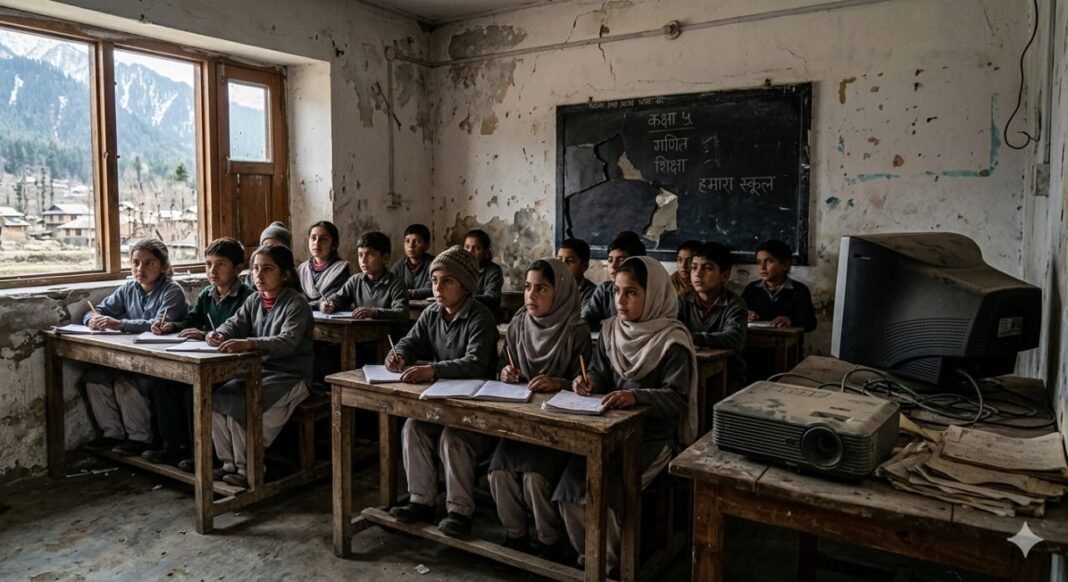
In the era of Digital India and the new education policy, while schools across the country are being integrated with modern technology, Jammu and Kashmir’s education system appears to still be relying on outdated systems. Recent educational data has revealed the true state of digital education in the state. According to the data, only 16.5% of schools in Jammu and Kashmir have access to smart classrooms, while approximately 83% of students still rely on traditional blackboards and outdated teaching methods.
In terms of digital education, Jammu and Kashmir has slipped to 32nd place among the country’s 28 states and eight union territories. This situation raises questions about the state government’s claims of modernizing and technology-based education.
Smart classrooms are modern classrooms that teach students using projectors, interactive whiteboards, audio-visual content, and e-learning resources. These facilities are considered to make learning more effective and easier. However, most government schools in Jammu and Kashmir still lack basic infrastructure such as computer labs, projectors, and stable internet connectivity.
According to the report, the penetration of smart classrooms nationwide was 14.9 percent in 2021-22, which is projected to increase to 30.6 percent by 2024-25. Despite this, approximately 70 percent of schools in the country are still not fully integrated with digital education. However, the situation in Jammu and Kashmir is considered significantly worse than the national average.
Education Department officials say that the lack of electricity supply, internet network, and technical resources in remote and mountainous areas of the state remains the biggest obstacle to the expansion of digital education. In many areas, school buildings exist, but modern teaching facilities are lacking.
Academics and education experts believe that if the government truly wants to make the Digital India campaign a success, the smart classroom network in Jammu and Kashmir must be rapidly expanded. Providing technical training to teachers and ensuring better internet and power supply in schools is also crucial.
Experts warn that if the state’s digital education system is not strengthened in a timely manner, students in Jammu and Kashmir could continue to lag behind in national competition.