In Jammu, both political and public outrage are intensifying over the statement made regarding the cow. Following the statement, protests have erupted on the streets, with strong resentment being felt among religious organizations as well as youth.
Yesterday, a vigorous demonstration was held in Jammu by the Rashtriya Bajrang Dal and the Jammu Yuva Rajput Sabha. Protesters raised slogans against the West Bengal government and leader Suvendu Adhikari and expressed their anger by burning his effigy. Participants stated that the cow is not just an animal but a symbol of faith and devotion for millions of Hindus, and therefore, any statement regarding its respect hurts public sentiment.
Speakers during the demonstration alleged that a law enacted in 1950, during the Congress government’s rule, allowed cows as young as 12 years old to be sent to the slaughterhouse. They say that the Bharatiya Janata Party has always maintained its ideology as distinct from the Congress party, but now changing the same law and raising the age limit from 12 to 14 years shows that there is no significant difference in the thinking of both parties. Those protesting said that earlier an attempt was made to divide society into “cow worshippers” and “cow eaters,” and now by setting the age limit for cows, an attempt is being made to send the message that after what age can a cow be slaughtered.
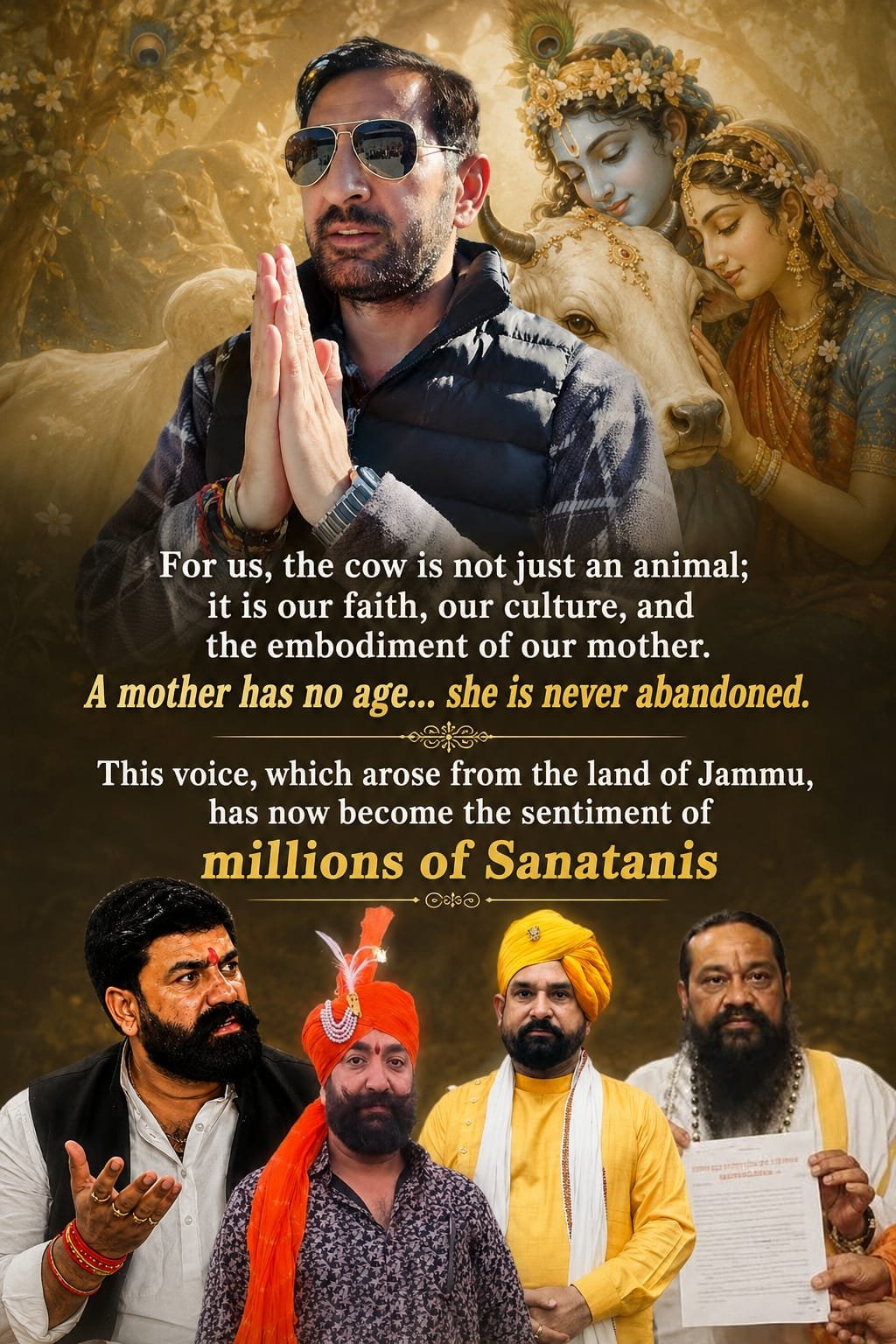
Meanwhile, a statement from Rajkumar Gupta, President of the Jammu and Kashmir Cow Protection Committee, has also surfaced, in which he called this comment a direct attack on the sentiments of the Hindu community. Rajkumar Gupta said, “We are those who consider the cow as our mother from the time of our birth till our last breath. No son can throw his mother out of the house or harm her in any way, no matter what her age.” He said that the statement deeply saddened him and that he never imagined that someone associated with the Bharatiya Janata Party would make such a comment.
Rajkumar Gupta further stated that in Sanatan Dharma, the cow is not considered merely an animal, but rather the abode of 330 million gods and goddesses. Referring to religious sentiments, he said, “The cow forgives, but anyone who conspires against the cow or insults its honor is certain to be destroyed.” Citing the example of Lalu Prasad Yadav, he said that he was once considered one of the country’s leading leaders. However, allegations of corruption in funds meant for cow rights and their service severely damaged his political image, and today people no longer remember him as much as before.
Rajkumar Gupta demanded a public apology for this entire matter so that the faith of millions of people is respected. He warned that if such statements are not stopped, a public movement could take a larger form in the future. The protesters say, “The age of a cow is not considered; a cow is a mother.” Whether the cow is old, sick, healthy, native, or imported—its place in Hindu society will always be that of a mother.
Rameshwar Singh’s statement on this issue has also sparked a new debate among the people. The protesters said that the voice raised by MLA Bani is now becoming the voice of the people. They say, “The cow will remain our mother until our last breath; no law or political statement can change our faith.”
This voice rising on the streets of Jammu is no longer limited to politics; it has become an issue of faith, culture, and religious respect. People say, “In a country where the cow is given the status of a mother, questioning its respect is like hurting the sentiments of millions of people.”