JNM Journalist: Hardeep Jamwal, Jammu
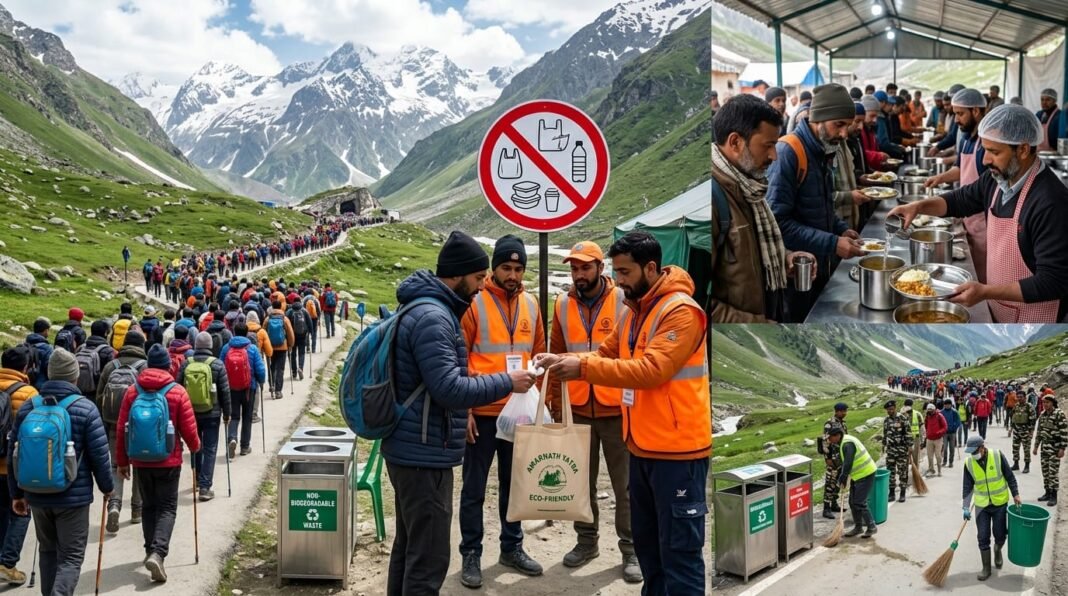
The Shri Amarnath Shrine Board and the administration have made special preparations to ensure the Shri Amarnath Yatra 2026 is clean, safe, and eco-friendly. The use of polythene bags, thermocol, and single-use plastic will be completely banned along the pilgrimage route. If a pilgrim arrives at the base camp carrying a plastic bag, they will not be permitted to carry it further; instead, cloth bags will be provided to pilgrims free of cost.
The Shrine Board has readied approximately 150,000 cloth bags at both the Baltal and Pahalgam base camps. Bhandaras (community kitchens) and shopkeepers operating along the route have also been instructed to use only steel plates and glasses. Fines will be imposed on those found using plastic utensils.
To ensure the pilgrimage remains entirely clean and pollution-free, the responsibility for waste management has been entrusted to ‘Swaha Resource Management,’ an organization based in Indore. This initiative will be supervised by the Rural Sanitation Department of Jammu and Kashmir.
Approximately 4,000 sanitation workers have been deployed to maintain cleanliness along the entire route, while 623 personnel will specifically handle waste management tasks. Around 5,000 toilets and bathing facilities have also been set up along the route for the convenience of pilgrims.
During last year’s Amarnath Yatra, approximately 450 tonnes of waste were collected. This time, the administration has set a target to reduce waste generation by 15 percent through better management and public participation.
The administration emphasizes that the Amarnath Yatra is not merely an event of faith but also entails a responsibility to conserve the Himalayan environment. Pilgrims are urged to avoid using plastic, adhere to the prescribed rules, and cooperate in making the pilgrimage clean, safe, and eco-friendly. The administration hopes that this year’s Yatra will set a new benchmark for cleanliness and environmental conservation.