JNM | Journalist Hardeep Jamwal, Jammu
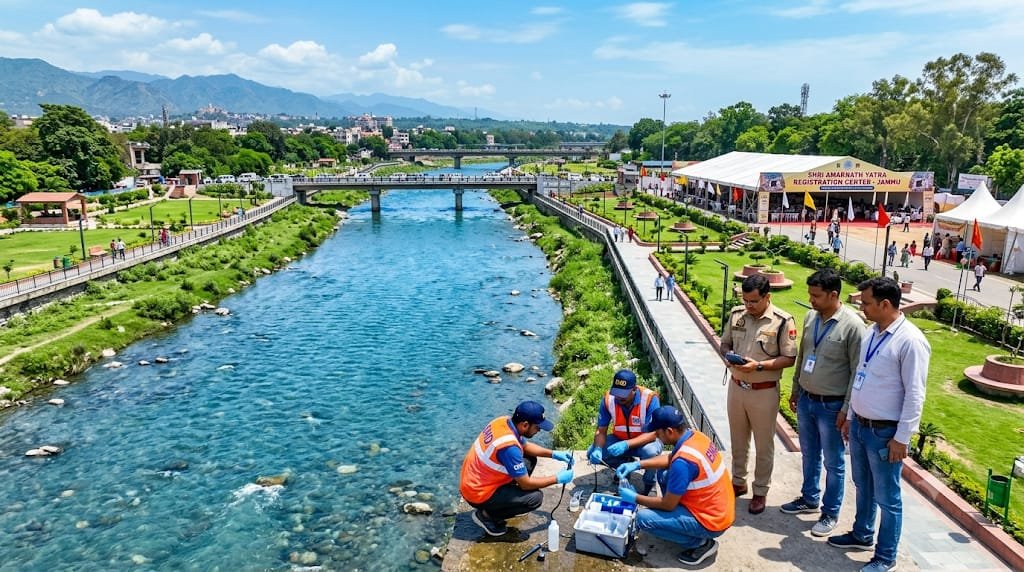
The water quality of the Tawi River—Jammu’s lifeline and the ‘Daughter of the Sun’—is showing consistent improvement. Since 2022, the water quality has enhanced. Although there was a dip in quality during intervening years due to rising pollution levels, the water has now returned to the ‘Level 3’ quality category, thanks to continuous monitoring, strict enforcement, and pollution control measures implemented by various departments.
According to the water quality report released by the Central Water Commission (CWC) in April, levels of Dissolved Oxygen and Biochemical Oxygen Demand (BOD) in the Tawi River were found to be within prescribed standards. This is considered a positive sign for the river’s health and cleanliness.
Vasu Yadav, Chairman of the State Pollution Control Committee, stated that the Tawi River’s water quality is tested every three months. The CWC prepares the report, based on which various departments collaborate to take necessary pollution control measures. He noted that most drains discharging into the river have been plugged, leading to a significant reduction in pollution levels.
He mentioned that while wastewater from households situated along the riverbanks still reaches the Tawi in some areas, plans are in place to curb this in the future. Additionally, a ban is already in effect regarding the dumping of industrial waste, refuse, and other forms of garbage into the river.
In view of the upcoming Amarnath Yatra, the administration has decided to step up surveillance in the Tawi Riverfront area. Facilities for offline registration and the issuance of health certificates for pilgrims will be set up there. To maintain the river’s cleanliness, special teams—acting under the directives of the Pollution Control Committee, Municipal Corporation, CWC, and the National Green Tribunal (NGT)—will be deployed to ensure no one dumps garbage into the river.
According to the report, the Tawi River’s water quality was at ‘Level 4’ in 2018. Subsequently, thanks to remediation efforts, the river reached ‘Level 3’ status in 2022. Although a slight decline in quality was recorded in 2025, the water has since improved and returned to the ‘Level 3’ category. According to experts, ‘Level 1’ and ‘Level 2’ are classified as highly polluted categories.
An April 2026 report reveals that the dissolved oxygen level in the Tawi River is 7.18 mg/L, exceeding the prescribed standard of 6 mg/L. Meanwhile, the Biochemical Oxygen Demand (BOD) level was recorded at 1.46 mg/L, which is below the maximum permissible limit of 2 mg/L. These figures clearly indicate that the Tawi River’s water is cleaner and in better condition than before.
The administration and relevant departments believe that if monitoring and pollution control drives continue in this manner, further improvement in the Tawi River’s water quality is possible in the coming years.